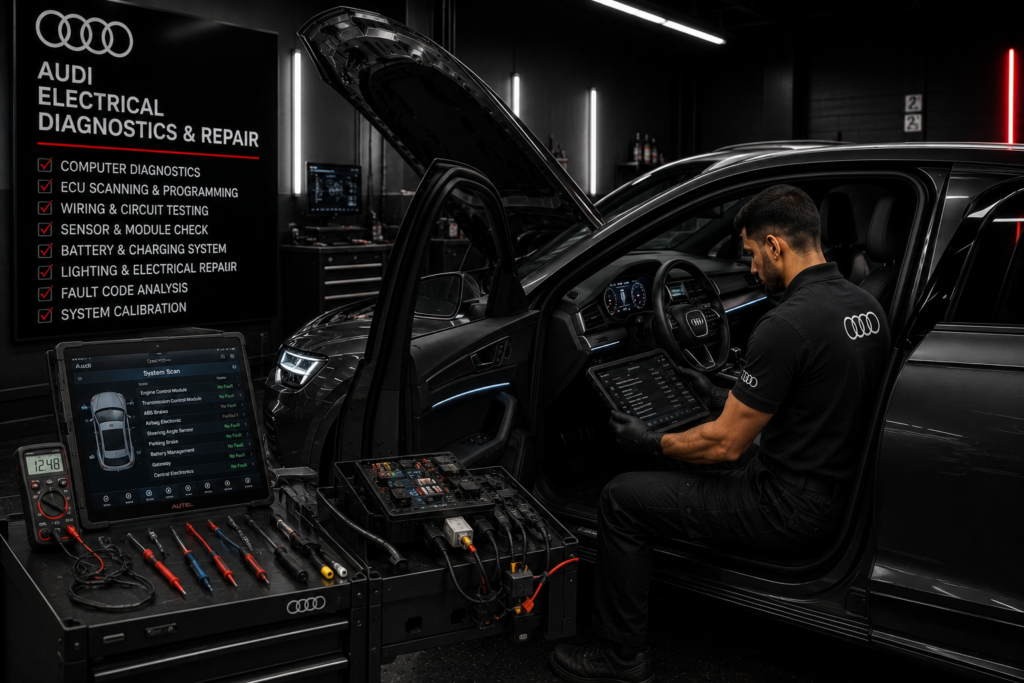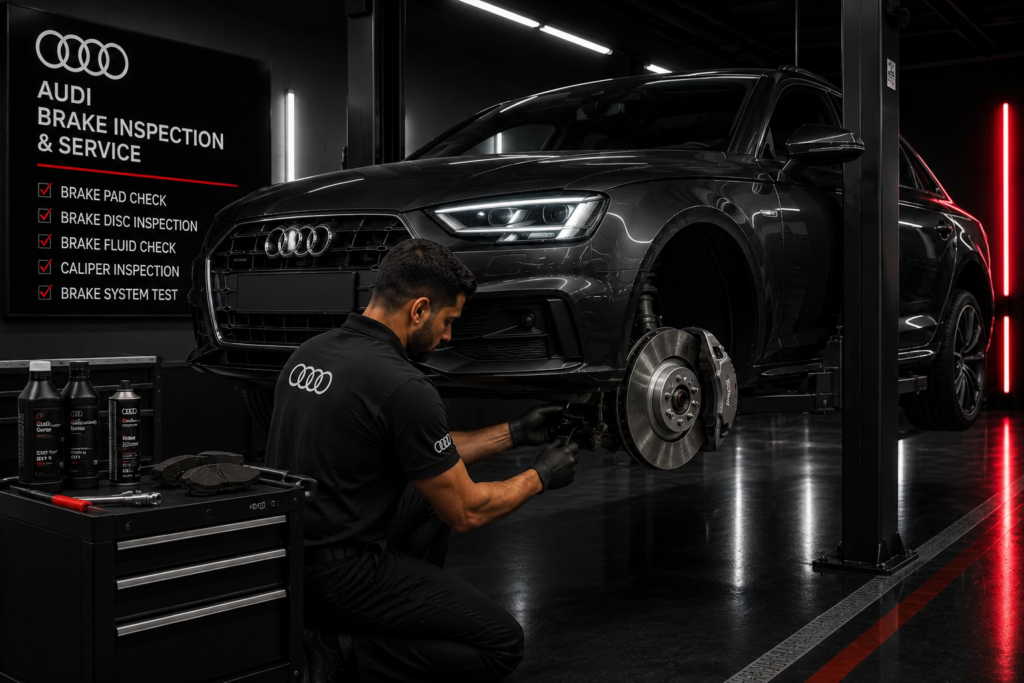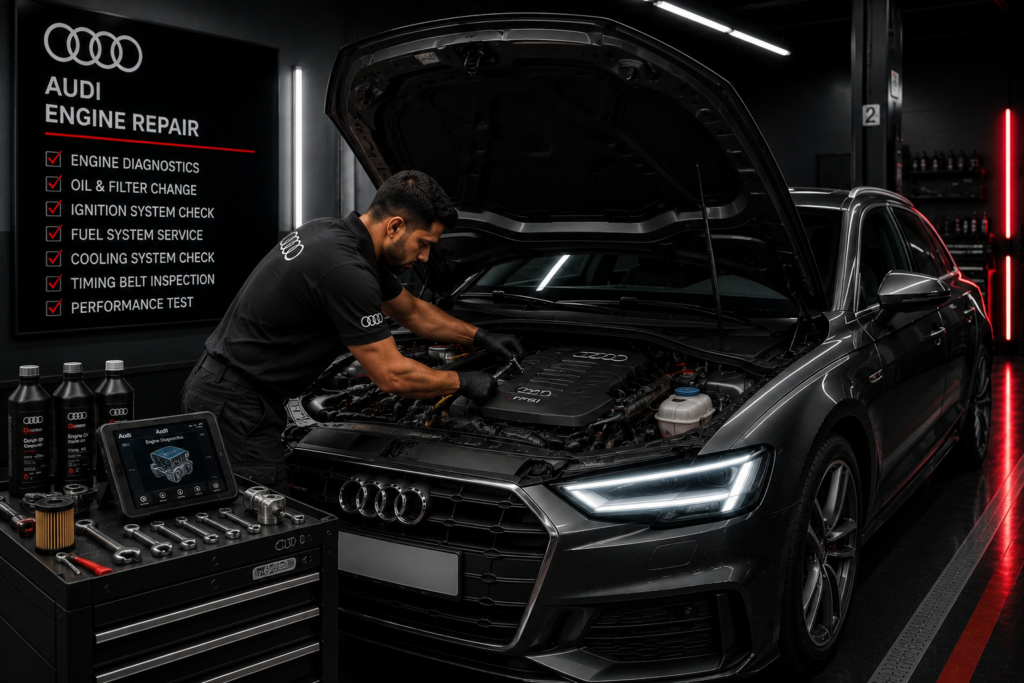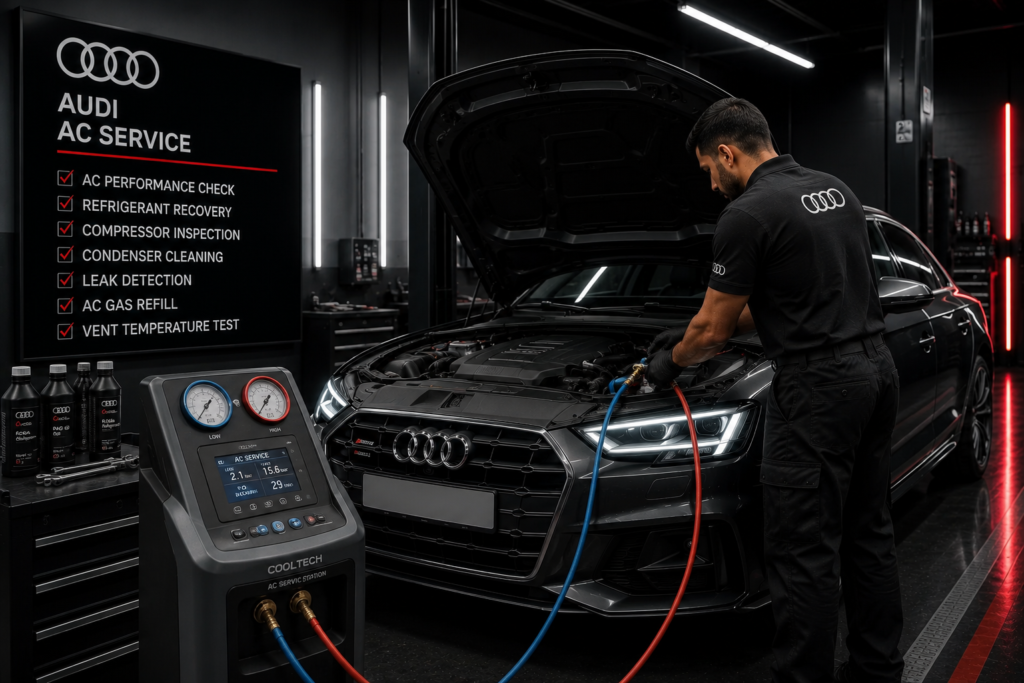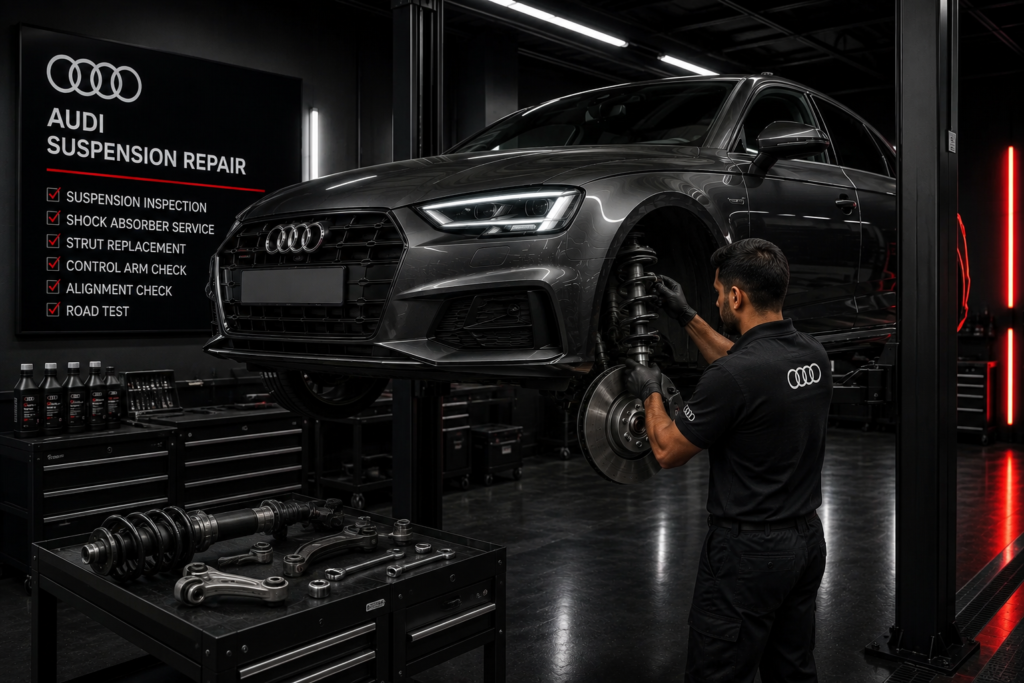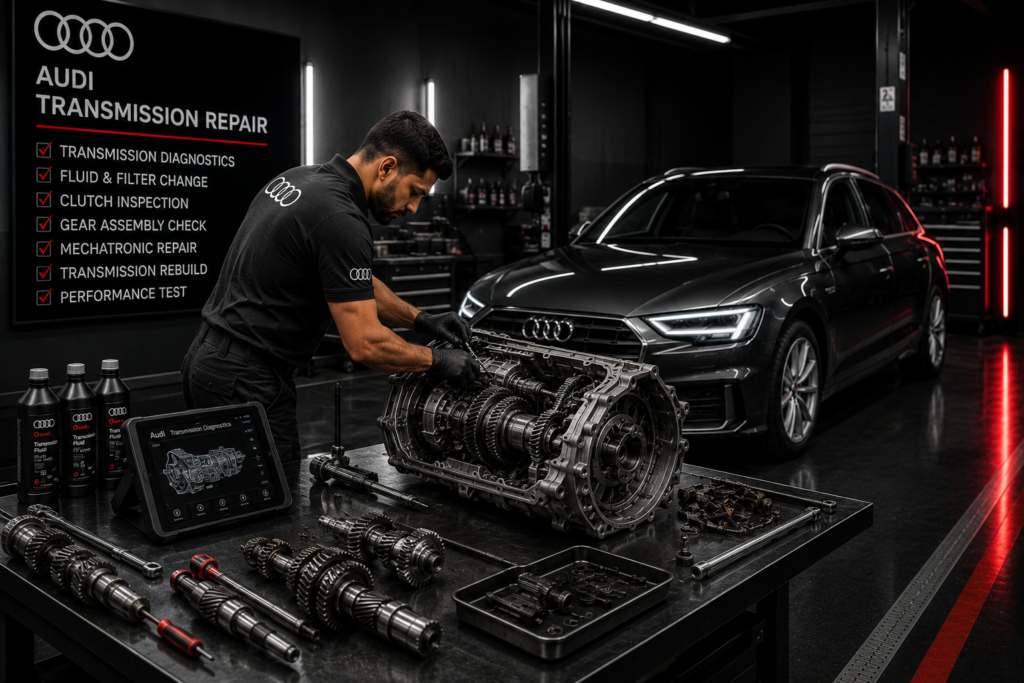
Looking for the best Audi servicing center in Dubai? Visit our state-of-the-art facilities for tailored repairs and services rendered at our Audi repair workshop Dubai.
From routine maintenance to advanced diagnostics and complex repairs, we deliver expert service for every Audi model with precision and care.
A closer look at the Audi vehicles, technical work and attention to detail inside our Dubai workshop.
TFSI stands for Turbo Fuel Stratified Injection, Audi’s petrol-engine technology combining turbocharging with precise fuel injection. TFSI engines are designed to deliver strong performance while controlling fuel consumption. Correct engine oil, cooling-system condition, ignition components and regular maintenance are particularly important for long-term reliability.
quattro is Audi’s all-wheel-drive system. Depending on the vehicle and system version, power is distributed between all four wheels to improve traction, stability and driving confidence. If an Audi quattro develops vibration, unusual drivetrain noise, warning messages or uneven tyre wear, the drivetrain, tyres and related components should be inspected.
The maintenance required depends on the Audi model, transmission and quattro system fitted. Certain vehicles may have drivetrain fluids and components that require inspection or replacement according to the correct maintenance schedule. The vehicle identification number and service information should be checked before recommending any fluid or repair procedure.
S tronic is Audi’s dual-clutch transmission. It combines the convenience of an automatic gearbox with the efficiency and direct response associated with a manual transmission. Depending on the model, Audi uses different S tronic versions, so the correct fluid specification, service procedure and diagnostic approach must be confirmed for the individual vehicle.
Possible signs include jerking, delayed engagement, harsh gear changes, shuddering at low speed, transmission warning messages, fluid leakage or reduced-power mode. These symptoms do not automatically confirm an internal gearbox failure. Diagnosis may include a road test, fault-code analysis, fluid inspection and checks of the transmission’s electrical and mechanical systems.
MMI is Audi’s multimedia and vehicle-control interface. Depending on the model and specification, it may manage functions such as navigation, media, connectivity, vehicle settings and Audi connect services. MMI problems may be related to software, communication, electrical supply, display hardware or connected control modules, so diagnosis should go beyond simply restarting the system.
Yes. Audi warning lights can be connected to the engine, transmission, ABS, airbags, suspension, battery, driver-assistance systems or other vehicle electronics. A diagnostic scan identifies stored faults, but it does not always identify the failed part by itself. Further electrical or mechanical testing may be required before repairs are recommended.
The correct interval depends on the Audi model, engine, mileage, usage and the maintenance schedule assigned to the vehicle. Dubai’s heat, traffic and extended idling can place additional demand on engine oil, batteries, cooling systems, tyres and air-conditioning components. Follow the vehicle’s service indicator, while also arranging inspections when operating conditions are demanding.
OFJ Automotive can inspect and service Audi models, including performance-oriented S and RS vehicles, subject to the specific repair and equipment required. These vehicles may use specialised braking, suspension, cooling, drivetrain and engine systems, so the vehicle should be assessed before the required work and parts are confirmed.
Audi air-suspension problems may involve an air spring, compressor, valve block, ride-height sensor, wiring, control system or an air leak. Common symptoms include uneven ride height, slow lifting, excessive compressor operation, reduced ride comfort or a suspension warning message. The system should be tested before individual components are replaced.
Oil consumption can be affected by the exact engine design, mileage, operating conditions, maintenance history and mechanical condition. Possible causes include external leaks, crankcase-ventilation faults, turbocharger concerns or internal engine wear. The correct approach is to inspect for leaks, confirm consumption accurately and perform further tests when necessary.
Genuine Audi parts and suitable OEM-quality alternatives can be supplied depending on availability, the repair requirement and the customer’s preference. The selected brand, part type, price and expected availability should be clearly stated in the quotation before approval.
This answer should only be added after management confirms OFJ’s Audi high-voltage qualifications, safety equipment and repair scope. Audi currently uses both fully electric e-tron vehicles and plug-in hybrid models, now identified in newer branding as e-hybrid. High-voltage diagnosis should never be advertised unless the required capability is genuinely available.